Jodorowsky's Dune: The $3 Million Book of a Film Never Made
Jodorowsky's Dune was never filmed, but its storyboard book sold for about $3 million. Did it really shape Alien and Star Wars? The legend against the record.

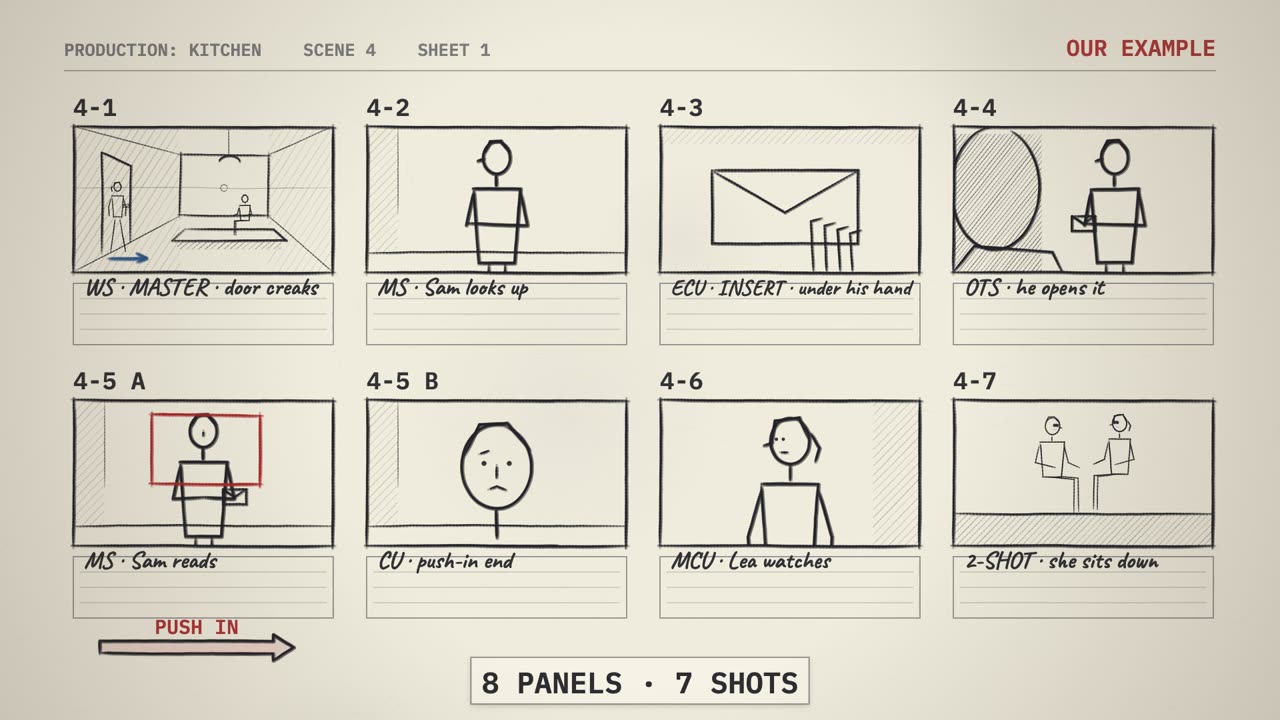
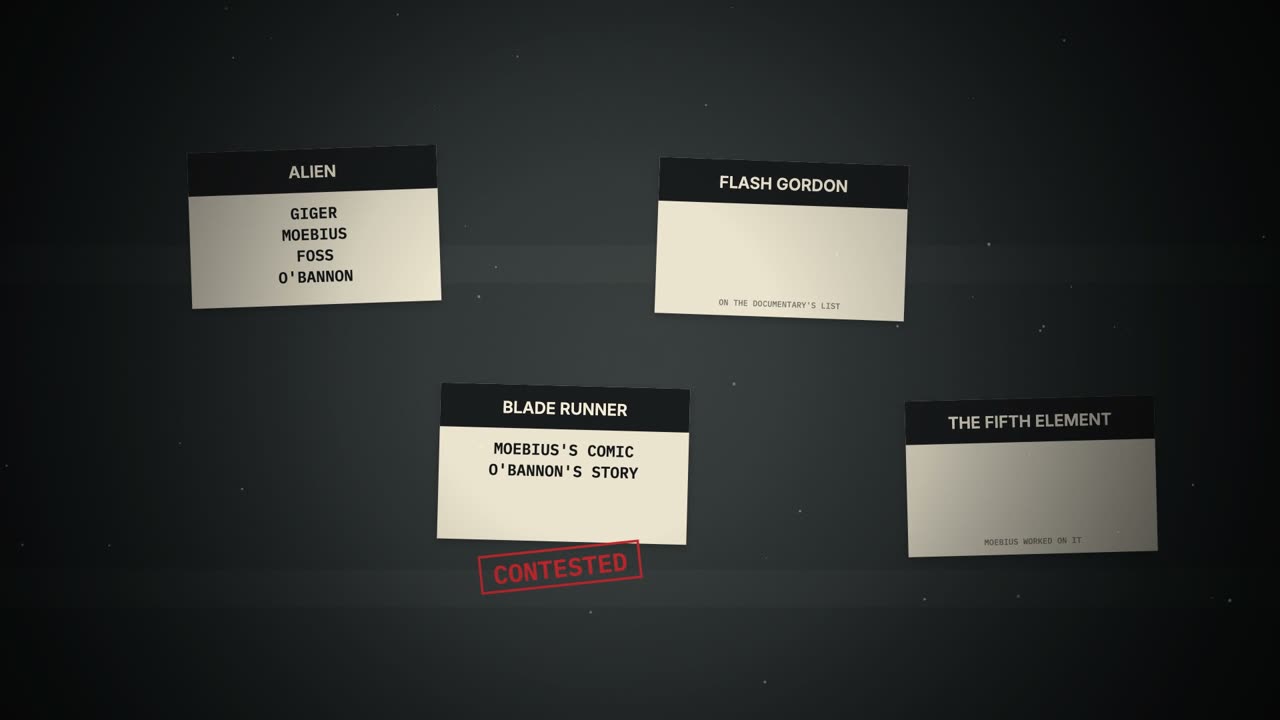
Jodorowsky's Dune is the science fiction film that Alejandro Jodorowsky planned in Paris in the mid-1970s and never made. It never got past pre-production. What survives is the plan: a storyboard book that draws the whole film, shot by shot. In 2021, one copy of that book sold at Christie's in Paris for about three million dollars. The crypto group behind the purchase then announced it would turn it into a series, but owning the book gave it no right to use what's inside. The famous legend says the unmade film shaped Star Wars, Alien and Blade Runner. The record says something narrower: Alien, yes, through the people; Star Wars, no record at all; Blade Runner, no record for the book; the link is a comic by two of its artists.
The legend, as it's usually told
In the 1970s, a visionary director gathers a team of artists in Paris and plans the greatest science fiction film never made. Hollywood says no. But the book goes from studio to studio, and its ideas turn up in Star Wars, in Alien, in Blade Runner. It changes science fiction forever.
Jodorowsky's Dune, the 2013 documentary: what it gets right
That's the version in Frank Pavich's documentary Jodorowsky's Dune, and in Christie's own lot essays. The documentary premiered at the Directors' Fortnight in Cannes on 18 May 2013 and reached American cinemas in spring 2014 [30]. It argues that the book, sent round the studios, shaped Star Wars, the Alien films, Flash Gordon, the Terminator films and The Fifth Element; its Cannes synopsis also names Blade Runner and Total Recall [30][23].
What it gets right is the team. The people Jodorowsky gathered in Paris really did go on to Alien, and that part of the story is on record. The longer list of films is the documentary's argument, and its own director is careful about it. Asked whether those films got their ideas from the book, Pavich said: "Who really knows?" [24] Below, each claim is checked against the record. Where the documentary is quoted, it is as reported by reviews and by interviews with Pavich.
What was Jodorowsky's Dune?
Alejandro Jodorowsky was born in Chile in 1929, to Russian immigrant parents, and later became a French citizen. By the mid-1970s he had made El Topo (1970) and The Holy Mountain (1973). For his next film, he wanted something bigger. In his own words, from a 2012 interview with the BFI: "I wanted to turn the film into a prophet."
The film was to be Dune, from Frank Herbert's science fiction novel, published as a book in 1965. An American producer, Arthur P. Jacobs, had held an option on the film rights, but he died in 1973. In 1974, a French production company, with the producer Michel Seydoux, bought the rights. Film rights are the legal permission to make a movie from a book. Keep that in mind.
Jodorowsky tells the start his own way. After a dream, he says, he phoned Seydoux, who offered to buy the rights, and he hadn't even read the novel. No one else tells that story [1].
The team Jodorowsky called his warriors
Jodorowsky gathered a team he called his "spiritual warriors".
- Moebius, real name Jean Giraud, the French comics artist, drew the whole film as a storyboard: a film drawn before it's filmed, like a comic of the movie. Jodorowsky puts it at 3,000 drawings, a figure that comes only from him [1].
- Chris Foss, a British illustrator known for science fiction book covers, designed the machines.
- H. R. Giger, the Swiss painter, designed the world of the villains, the Harkonnens. Jodorowsky says Salvador Dalí showed him Giger's catalogue.
- Dan O'Bannon, a young American, was hired for the special effects after Jodorowsky saw Dark Star, the film O'Bannon had made with John Carpenter.
Dalí, Orson Welles, Mick Jagger: Jodorowsky's stories
Then come the famous stories. Jodorowsky tells them beautifully, and for each of them his telling is all we have, so read them as his stories.
Salvador Dalí. In Jodorowsky's 1985 essay in the French magazine Métal Hurlant, Dalí wanted to be the best-paid actor in the world and asked 100,000 dollars an hour. Jodorowsky says he paid for one hour and planned a puppet double for the rest [1]. By the 2013 documentary (as reviews report it), the fee had become 100,000 dollars a minute.
Orson Welles. Jodorowsky tells how he won Welles over by promising to hire the chef of Welles's favourite restaurant. That story is not in the 1985 essay at all [1]. The earliest telling we found is the 2013 documentary, nearly forty years later.
Mick Jagger and Pink Floyd. In 1985, Jodorowsky only says he met Jagger at a party in Paris; Jagger's casting comes later, from the documentary. He says Pink Floyd agreed to write most of the music. Christie's puts it more carefully: Pink Floyd and Magma were "approached".
He also says he met the effects artist Douglas Trumbull and turned him down [1]. The popular claim that he walked out has no source.
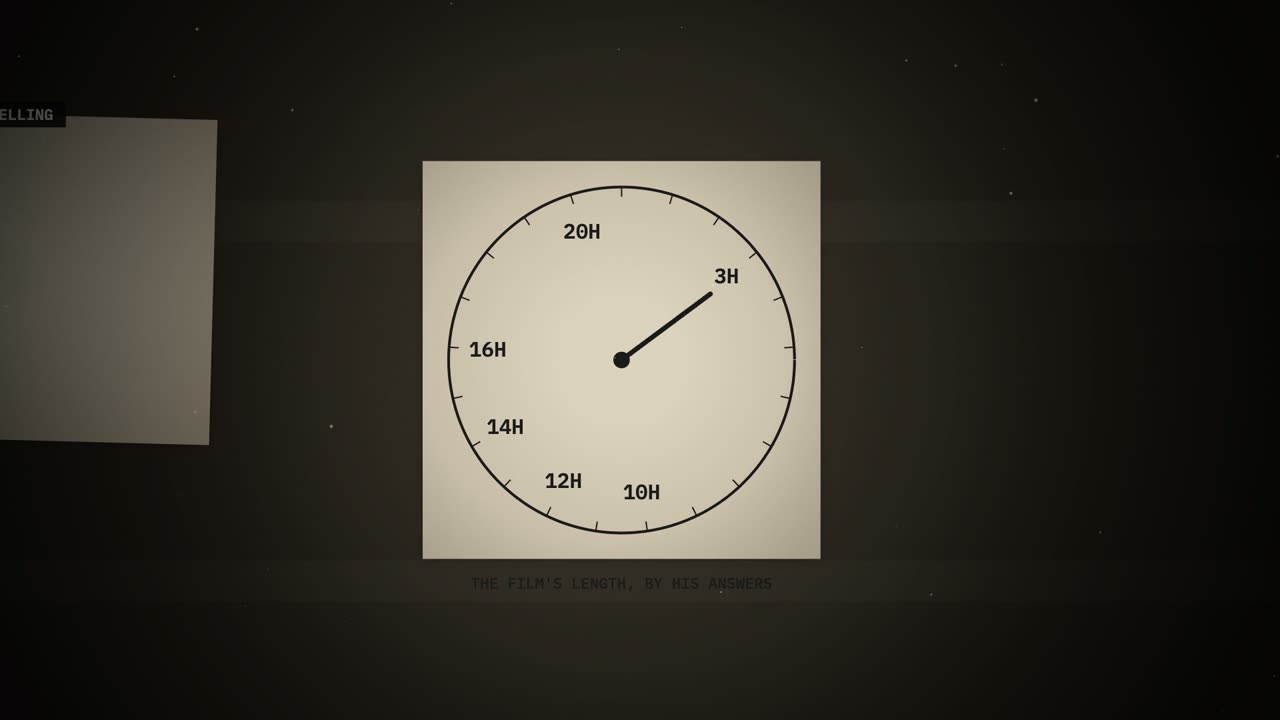
How long would Jodorowsky's Dune have been?
You'll often read that it would have run fourteen hours. Jodorowsky has given every answer from three hours to twenty: sixteen hours in 2012, "12 hours! Or 20 hours!" in the documentary, fourteen or sixteen in 2014 [4][26]. But in a 1984 open letter in the French magazine L'Ecran Fantastique, he wrote three hours, no more, plus a six-part TV series. (The letter is quoted here as DuneNewsNet gives it [4].) So there is no single answer; of Jodorowsky's own answers, the one in writing closest to the time is three hours.
Why was Jodorowsky's Dune never made?
Sources differ on the budget, from about ten to twenty million dollars. They agree millions were still missing. Reports put the money already spent at around two million [2][28].
So after about two years of work in Paris, Jodorowsky and Seydoux printed the plan as a book and took copies to the American studios.
Every studio said no [5]. No studio has been named on record, and no studio's reason survives in what we found. Jodorowsky wrote that the project was "sabotaged in Hollywood" [1]. Pavich says the studios "didn't believe in his vision" [25]. The money dried up.
Within a few years, the rights belonged to the producer Dino De Laurentiis (sources disagree on whether that was late 1976 or early 1979). David Lynch's Dune came out in December 1984. Jodorowsky has said that when he saw it, he was happy, because the film was awful (the documentary's wording, as reviews report it).
What is in the Dune storyboard book?
The book was printed around 1975 by the Aviaplans workshops in Suresnes: a blue cloth book, 210 by 295 millimetres, about the size of a sheet of paper turned sideways, with Foss's proposed poster pasted on the cover.
Inside is the whole film: 11 colour plates after Foss, Moebius and Giger, and 268 black and white plates, mostly storyboard. One plate can hold several panels, so the book neither proves nor disproves the "3,000 drawings". It does mean a few hundred pages, not three thousand.
How many exist? Christie's estimates that ten to twenty were printed and bound, and that probably fewer than ten survive. Other counts disagree, from Pavich's "only two exist. Maybe a third" to around ten.
Did Jodorowsky's Dune influence Alien?
Yes, through people, not pictures.
When the French money pulled out, Dan O'Bannon went back to Los Angeles broke. Jodorowsky has said, since 1985, that O'Bannon ended up in a psychiatric hospital. O'Bannon's own version, in a 2007 interview, is simpler: he gave away his car, "ended up on Ronnie Shusett's sofa", and that's where he wrote Alien, with Ronald Shusett [17].
Before Alien sold, George Lucas hired O'Bannon for the targeting-screen graphics on Star Wars.
When Alien got made, O'Bannon wanted the Dune artists on it, "in particular Giger to design the thing". He knew Giger's work from the Dune project, and Giger came. Moebius designed spacesuits. Chris Foss worked on it too. Four of the people from Paris ended up on Alien.
Did the Alien creature come from the Dune book?
No. O'Bannon showed Ridley Scott Giger's book of paintings, Necronomicon (1977), the book that led the Alien producers to Giger. Scott had Giger base the creature on a painting he'd already made, Necronom IV, from 1976 [19]. It did not come from the Dune storyboard.
At the 52nd Academy Awards, on 14 April 1980, Alien won the Oscar for Visual Effects. Giger shared it with four others.
Did Jodorowsky's Dune shape Star Wars?
This is the claim the dates make hard. The Star Wars timeline, from the University of Illinois Library [22]:
- 1 November 1974: McQuarrie's first concept art (the paintings that design how a film's world looks).
- 13 December 1975: Fox gives the film its green light.
- 22 March 1976: shooting begins in Tunisia.
- 25 May 1977: release.
The Dune book was going round the studios around 1975 and 1976, while Star Wars was already being designed.
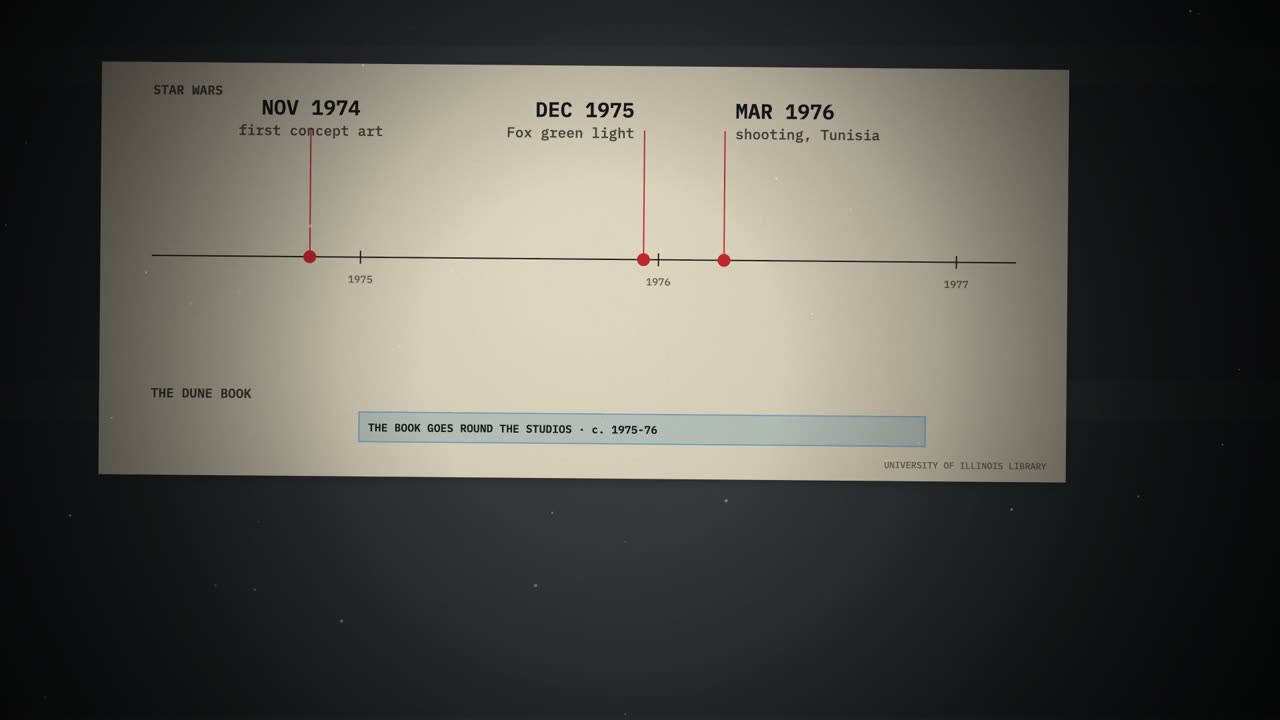
There is no record that anyone on Star Wars used the book. Jodorowsky himself, in 1985, only wrote that "the visual aspect of Star Wars resembled our style". Even Pavich thinks Herbert's novel mattered more: "I don't think that Tatooine would have had two suns," he said. The Star Wars producer Gary Kurtz told him he did not recall seeing the book [23].
So: legend. If Dune shaped Star Wars, it was Herbert's novel.
What about Blade Runner and the rest?
The documented link to Blade Runner runs through a comic, not the Dune book: "The Long Tomorrow", which Moebius drew in the mid-1970s from a story by O'Bannon, and which Scott and his designers looked to [20][29]. Scott's own words on it are not in the sources we found, so treat that link as likely rather than settled.
The documentary's longer list adds films like Flash Gordon, the Terminator films and The Fifth Element; its Cannes synopsis also names Total Recall. Where the shots look alike, it's usually because the same artists worked on them. Moebius, for one, was a credited designer on The Fifth Element. Jodorowsky and Moebius even sued, saying The Fifth Element copied their comic The Incal; a French court rejected the claims.
The $3 million book: Christie's and Spice DAO
On 22 November 2021, copy number 5 came up at Christie's in Paris, estimated at 25,000 to 35,000 euros. It sold for 2,660,000 euros, about three million dollars, around a hundred times the estimate and a record for a storyboard at auction.
The winning bid came from Soban Saqib, a co-founder of a crypto group called Spice DAO. A DAO is an online group that pools cryptocurrency and votes with tokens on what to do with it. Its roughly 750,000 dollars in ether fell short, so he bid with his own money. The group then raised 11.8 million dollars to pay him back and fund projects.
Its own post on 1 December 2021 already admitted it, in a half-sentence: "we do not own the IP to Frank Herbert's masterpiece" [10].
Why owning the book gave no rights
In January 2022, the group announced its plans: make the book public "to the extent permitted by law", produce an "original animated limited series" inspired by it and sell it to a streaming service, and support derivative projects.
The internet responded fast. People pointed out that the pages were already online, and that owning a copy of a book gives you no copyright in it. The Art Newspaper wrote that members had mistakenly believed the purchase gave them copyright [8].
Remember the film rights? They belong to whoever owns the story and the art: here, Herbert's estate, and the artists or their estates. Days later, the group wrote that it had "not been able to reach an agreement with any of the rights holders" and would make a wholly original series instead. In July 2022 it announced it would dissolve and let members redeem their tokens. Its co-founder said it was "embarrassing how things worked out" [12].
What is a copy of the Dune book worth now?
Other copies have sold since, for far less:
- 8 July 2023, Heritage Auctions: about 90,000 dollars ($90,625; we couldn't confirm whether that includes the buyer's premium).
- 12 December 2024, Christie's London online: copy number 4, estimated at 250,000 to 350,000 pounds, sold for 277,200 pounds with the premium.
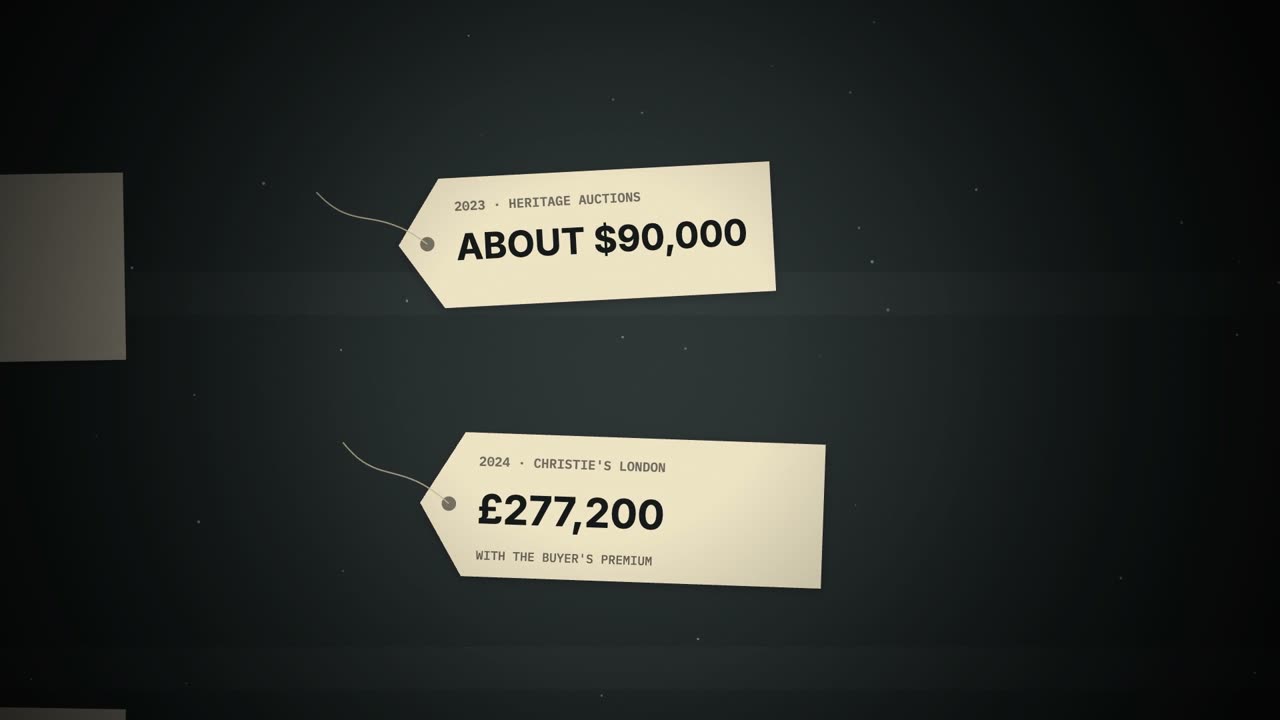
Here's the strange part. The book was worth millions as an object, and nothing as a permission. What it does carry is the film itself. Every shot Jodorowsky imagined is in there, drawn, in order, for anyone to see. That's why a film nobody shot can still be argued about fifty years later. Its storyboard was made.
Jodorowsky's Dune: legend against record
The same check works on other famous film stories, from the Jaws mechanical shark to why Hollywood is in California. Here is this one, claim by claim.
- "Jodorowsky's team went on to make Alien." Record. O'Bannon, Giger, Moebius and Foss all worked on it.
- "The Alien creature was a Dune design." Legend. It came from Giger's 1976 painting Necronom IV.
- "The book shaped Star Wars." Legend. No record, and the dates make it hard. O'Bannon did work on Star Wars's screens.
- "The book shaped Blade Runner." Disputed. The real link is the comic "The Long Tomorrow".
- "It would have run fourteen hours." Jodorowsky has said everything from three to twenty; his 1984 letter says three.
- Dalí's fee, Welles's chef. His tellings; the fee grew from per hour to per minute, and the chef first appears in 2013.
- "Moebius made 3,000 drawings." His count. The book holds 279 plates.
- "The buyers thought they'd bought the movie." Too strong. Their own first post said they didn't own the IP.
Put your own film on paper first
If you want to plan a film of your own shot by shot, start with how to make a storyboard, step by step. Our app, Draw Storyboard, is made by EgeTech, the studio behind this site and the channel. You storyboard with the Apple Pencil on iPad, build shot lists and animatics, and export a PDF. It's free to download, and your first project is free. You don't need it for anything in this article.
Sources
What the 2013 documentary says is quoted as reported in the reviews and in the interviews with its director listed here.
- Alejandro Jodorowsky, "Dune: le film que vous ne verrez jamais", Métal Hurlant no. 107 (1985); English translation "The Film You Will Never See", DuneInfo (translator not named). https://duneinfo.com/unseen/jodorowsky
- DuneInfo, timeline. https://duneinfo.com/unseen/timeline
- DuneNewsNet, "Arthur P. Jacobs' unmade Dune movie", 17 August 2023. https://dunenewsnet.com/2023/08/arthur-p-jacobs-unmade-dune-movie-history/
- DuneNewsNet, "How long would Jodorowsky's Dune movie have been?", September 2023 (quotes Jodorowsky's 1984 letter in L'Ecran Fantastique 49, Starlog 66 and the New York Times, 1983). https://dunenewsnet.com/2023/09/how-long-would-jodorowskys-dune-movie-have-been/
- Christie's Paris, sale 20079, lot 116, lot essay (2021). https://christies.com.cn/zh/lot/lot-6345488
- Christie's London, online sale 23204 (Science Fiction and Fantasy), lot 10, lot essay (2024).
- Fine Books Magazine, on the Christie's Paris sale, 23 November 2021. https://www.finebooksmagazine.com/news/world-auction-record-dune-storyboard-christies-paris
- Gabriella Angeleti, The Art Newspaper, 17 January 2022. https://www.theartnewspaper.com/2022/01/17/nft-group-shamed-jodorowsky-dune-book-copyright
- Jeff Benson and Jason Nelson, Decrypt, 1 December 2021. https://decrypt.co/87306/this-dao-bought-alejandro-jodorowsky-dune-bible-dao-doesnt-own
- Edward Ongweso Jr., Vice, 18 January 2022. https://www.vice.com/en/article/spicedao-roasted-for-spending-dollar38-million-on-jodorowskys-dune-book/
- Thom Waite, Dazed, 24 January 2022. https://www.dazeddigital.com/film-tv/article/55294/1/jodorowsky-doomed-dune-film-may-be-resurrected-animated-series-nft-spice-dao
- Jason Nelson, Decrypt, 28 July 2022. https://decrypt.co/106196/spice-dao-to-dissolve-after-infamous-dune-book-auction
- Rare Book Hub, auction report for Christie's sale 23204 (2024). https://www.rarebookhub.com/auctions/auction_detail_report?id=42240
- greg.org, 1 December 2024 (updated). https://greg.org/archive/2024/12/01/dune-bible-4-calling-spice-dao-2.html
- Heritage Auctions, lot 42064, 8 July 2023 (price seen in a search summary only).
- Michael Stillman, Rare Book Monthly, February 2022. https://www.rarebookhub.com/articles/3139
- "The Den of Geek interview: Dan O'Bannon", Den of Geek, 19 December 2007. https://www.denofgeek.com/movies/the-den-of-geek-interview-dan-obannon
- Moze J. Halperin, Vice, 30 May 2013. https://www.vice.com/en/article/the-legacy-of-jodorowskys-god-film/
- Sophie Wood, National Science and Media Museum blog, 3 September 2025. https://blog.scienceandmediamuseum.org.uk/designing-fear-in-alien-the-art-of-gigers-xenomorph/
- The Encyclopedia of Science Fiction: "Giraud, Jean", https://sf-encyclopedia.com/entry/giraud_jean ; "Giger, H R", https://sf-encyclopedia.com/entry/giger_h_r ; "Foss, Chris", https://sf-encyclopedia.com/entry/foss_chris ; "Herbert, Frank", https://sf-encyclopedia.com/entry/herbert_frank
- Academy of Motion Picture Arts and Sciences, the 52nd Academy Awards (1980). https://oscars.org/oscars/ceremonies/1980
- University of Illinois Library, Rare Book & Manuscript Library, "Star Wars timeline". https://exhibits.library.illinois.edu/s/rbml/page/star-wars-timeline
- Stephen Saito, interview with Frank Pavich, Moveablefest, 22 March 2014. https://moveablefest.com/frank-pavich-jodorowskys-dune/
- Jules-Pierre Malartre, interview with Frank Pavich, Den of Geek, 16 July 2014. https://www.denofgeek.com/movies/frank-pavich-interview-jodorowsky-s-dune/
- 032c, interview with Frank Pavich, 28 March 2014.
- Anton Bitel, interview with Alejandro Jodorowsky, BFI Sight & Sound, 2 November 2012. https://www.bfi.org.uk/sight-and-sound/interviews/alejandro-jodorowsky-pulling-rusty-brains-out-burrows-dimensions-never-imagined
- Molly Lambert, Grantland, 2 April 2014. https://grantland.com/hollywood-prospectus/the-impossible-dream-of-jodorowskys-dune/
- Ryan Lambie, "The fall and rise of Alejandro Jodorowsky's Dune", Den of Geek, 13 February 2012.
- Colin Marshall, Open Culture, 4 September 2018 (on "The Long Tomorrow" and Blade Runner).
- Quinzaine des cinéastes, Jodorowsky's Dune (2013 selection). https://www.quinzaine-cineastes.fr/en/film/jodorowskys-dune
- "Jodorowsky, Alejandro (1929–)", Encyclopedia of Latin American History and Culture, via Encyclopedia.com. https://www.encyclopedia.com/humanities/encyclopedias-almanacs-transcripts-and-maps/jodorowsky-alejandro-1929
- USC School of Cinematic Arts, news on Dan O'Bannon, 18 December 2009. https://cinema.usc.edu/news/article.cfm?id=9830
- Millenium, on the Fifth Element and Incal case, 18 January 2025. https://www.millenium.org/news/421123.html
- AFI Catalog, Dune (1984) (seen in a search summary only). https://catalog.afi.com/Catalog/moviedetails/67647