What Is Golden Hour in Film? (It Isn't an Hour)
What is golden hour in film? Why low sun looks gold, how long it really lasts, magic hour vs blue hour, and how magic hour cinematography is planned.

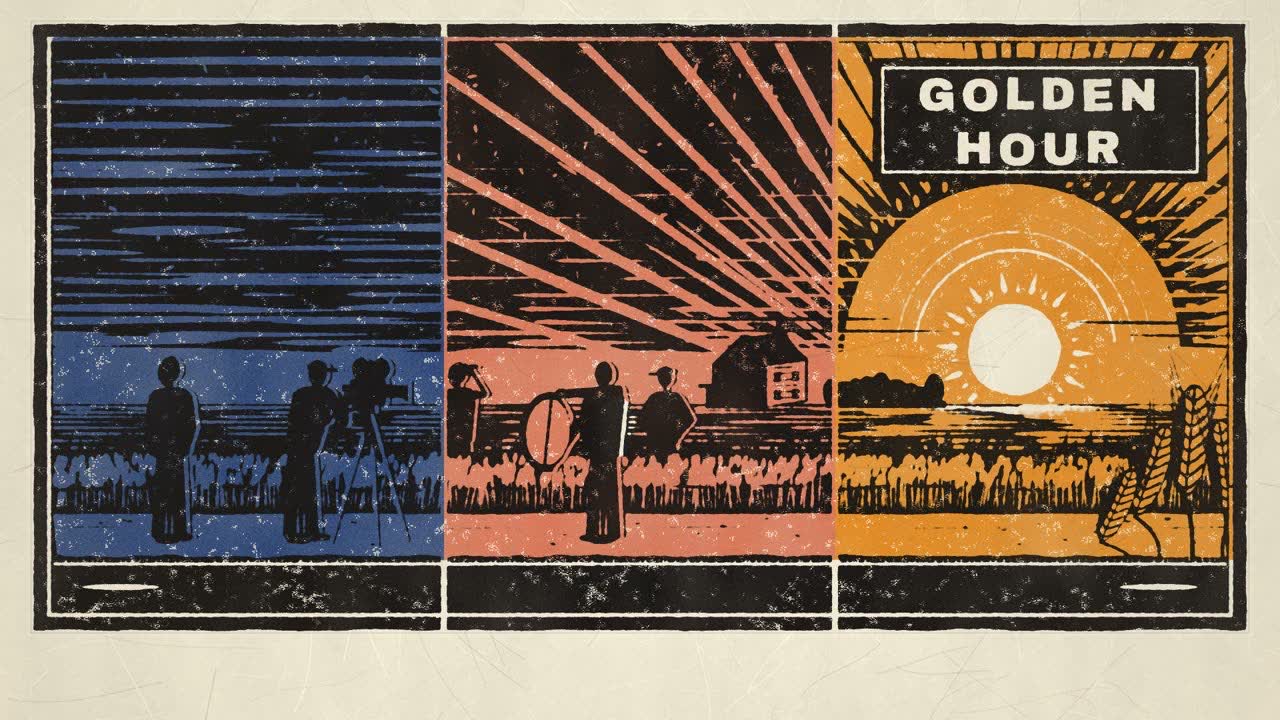
Golden hour in film is the stretch of time when the sun sits low, near sunrise or sunset, and its light comes in warm, sideways and with long shadows. Film crews more often say magic hour, and they usually mean something slightly different: the glow after the sun has gone, when the sky is still bright. After that comes blue hour, when the sky turns deep blue. None of the three has an official definition [9][10].
And golden hour is rarely an hour: about 40 minutes on the equator, about an hour in southern Canada in autumn [19]. One of the most famous films shot in that light is Days of Heaven (1978), and its cinematographer had a much shorter number for it. Twenty minutes.
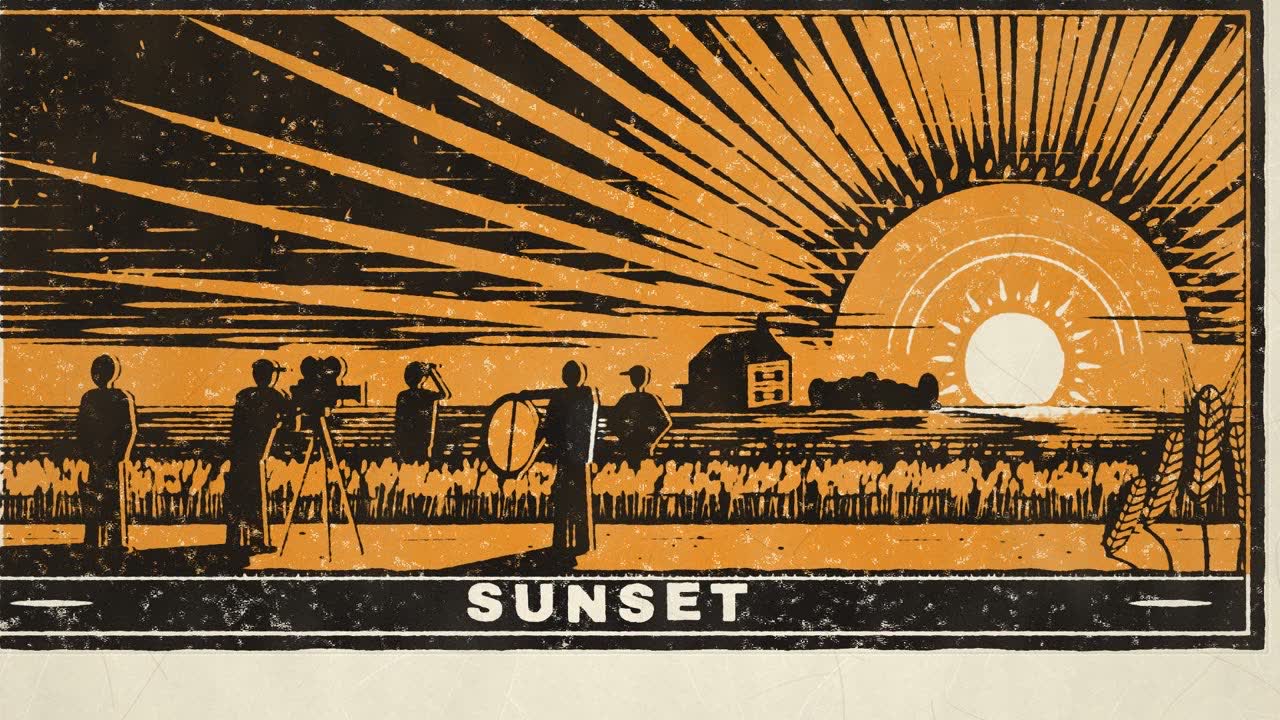
Twenty minutes a day: Days of Heaven, 1976
In late August 1976, a Hollywood crew started shooting Terrence Malick's Days of Heaven in Alberta, Canada [6][7]. The story is set on a Texas farm before the First World War, but the wheat fields were in southern Alberta, near Lethbridge, on farmland belonging to the Hutterites [1][6][7].
The cinematographer was Néstor Almendros, very nearsighted, in very thick glasses [4][5]. On the evenings Malick wanted, the crew rehearsed every move with the actors and the camera during the day. Then, as soon as the sun had set, they shot "as quickly as possible — even frantically", Almendros wrote [1][2][3].
Why the hurry? By his count, the time between sunset and total darkness was "only about twenty minutes" [1]. Crews called that light the magic hour. In his memoir, Almendros called the name "an optimistic euphemism" [4]. He also wrote that it was not easy to make an all-Hollywood crew understand that they would only shoot for twenty minutes a day [1][4]. Haskell Wexler, who shot part of the film, later remembered it the other way round: long waits, and a crew that didn't mind the dead time [25].
Golden hour vs magic hour vs blue hour
The three names overlap, and nobody owns them.
- Golden hour is when the sun sits low, near sunrise or sunset, and the light is warm, comes in sideways and throws long shadows. It's mostly a photographers' term. The Photographer's Ephemeris puts it bluntly: "'Golden hour' is not a term much used by cinematographers, it seems" [10].
- Magic hour is the film crew's word. The earliest evidence the Oxford English Dictionary has for it is from 1956, in American Cinematographer [11]. Cinematographers have long used it for the glow after sunset: Almendros described it as the time between when the sun has set and the fall of night, and Vilmos Zsigmond, on The Deer Hunter, as "just after sunset but before complete darkness fell" [1][12]. Usage is loose, though: American Cinematographer has also used it for the minutes just before sunset [12].
- Blue hour comes after that, when the sun is below the horizon and all the light comes from the sky, which turns a deep blue [9][17].
Because there's no official definition, tools draw the lines in different places [9][10]. One common version, used by photographers and several apps, runs golden hour from the sun 6 degrees above the horizon to 4 degrees below, and blue hour from 4 below to 6 below [10]. Timeanddate.com uses a wider band [9].
Now look where sunset falls inside that common band. Most of golden hour comes before the sun goes down. In southern Alberta in autumn, about 43 of its 63 minutes are before sunset; at the equator, about 28 of 40 [19]. So if a photographer and a cinematographer agree to meet "at golden hour", one of them is in for a wait.
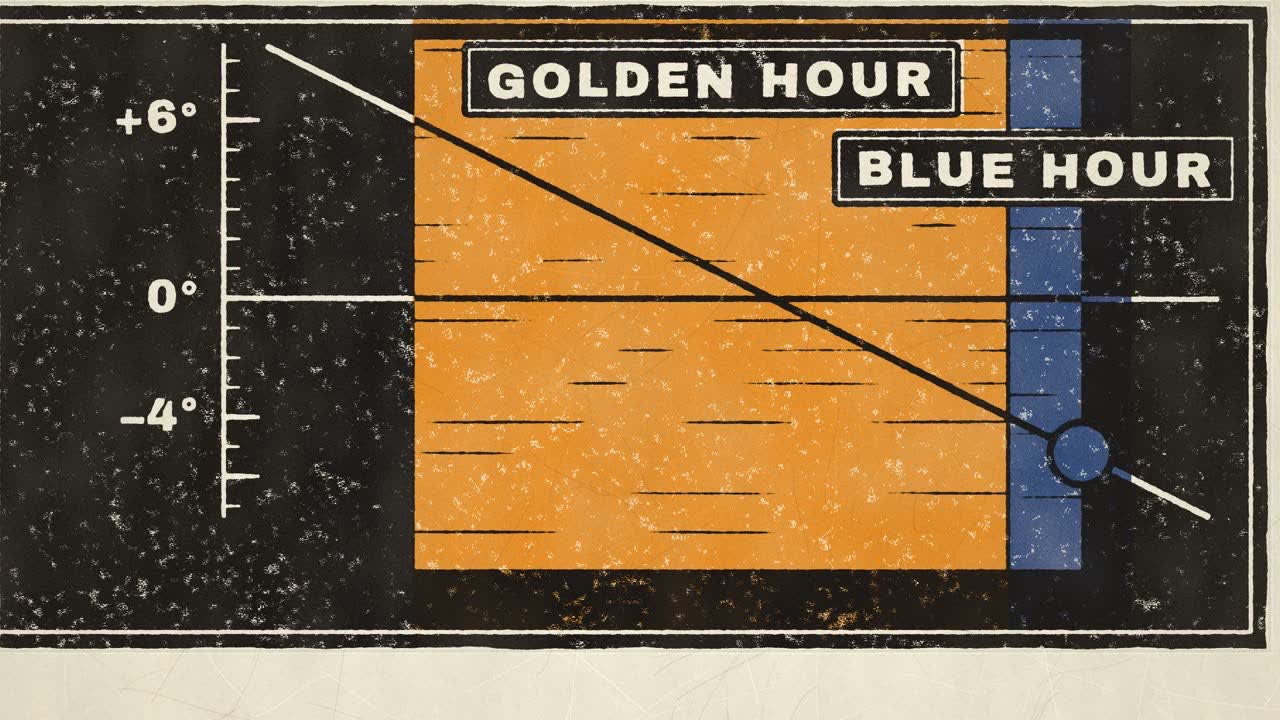
Why is golden hour light warm and soft?
It's the same sun at noon and at sunset. What changes is the road its light travels through the air.
The low sun crosses far more air. At noon the light comes down steeply, the shortest trip it makes all day. When the sun is low it comes in sideways. At 6 degrees up, the light crosses about nine times as much air as from straight overhead; at the horizon, about 38 times [14][15].
Air knocks the blue out. Air scatters short wavelengths much more than long ones: blue light at 450 nanometres about six times more than red at 700 [13][14]. That's why the noon sky is blue. On the long sideways road at sunset, much of the blue is scattered out of the beam before it arrives, and what's left is the warm end: oranges and reds.
Lighting people measure that warmth in kelvin. Low sun near sunrise and sunset is roughly 2,000 to 3,000 K; noon sunlight is about 5,000 K or more [16]. Lower number, warmer light.
"Soft" means lower contrast, and the shadows stretch. As the sun drops, the open sky gives a bigger share of the light. With the sun overhead on a clear day, light from the sky is less than 10% of the total; the share rises as the sun sinks, until in twilight it's all of it [13]. The shadows fill in and the contrast drops, though the sun itself is still a small, hard source, so cast shadows keep sharp edges. They also get long: at 6 degrees, a person six feet tall throws a shadow about 57 feet long, around 17 metres (our own geometry: height divided by the tangent of the sun's angle).
Then blue hour. Once the sun is under the horizon, the only light is the sky, and it turns a deep blue. (High up, a thin layer of ozone absorbs some of the orange and red; one study found ozone accounts for about two thirds of the blue of the zenith sky at sunset [17].)
How long does golden hour last?
Rarely an hour, and it's not the same everywhere or every day [9][19].
Near the equator, the sun drops almost straight down at sunset. Farther from the equator it sets on a slanting path, so it takes longer to cross the same band of sky [9][18]. With the common band of 6 degrees above to 4 below, we worked it out for both places with the NOAA solar method [19]:
| Place, season | Golden hour (+6° to −4°) | Sunset to end of civil twilight (−6°) |
|---|---|---|
| Equator | about 40 minutes | about 21 minutes |
| Lethbridge, Alberta, Sept to Oct 1976 | about an hour (62 to 64 min) | about 32 minutes |
Around midsummer and midwinter in southern Alberta it's longer still, about 75 to 80 minutes [19]. (Civil twilight is the astronomers' measure: it ends when the sun's centre is 6 degrees below the horizon. Sunset is the moment the top edge of the sun touches the horizon [8].)
So was Almendros wrong about his twenty minutes?
Not really. On paper, the sky near Lethbridge that autumn stayed lit for about half an hour after sunset [19]. Our guess is that he was counting what his film stock could still see: about twenty usable minutes, by his account [1][4]. Wexler, for his part, remembered "a long magic hour" [25]. Either way, twenty minutes isn't something you hope for. You schedule it.
Magic hour cinematography: how film crews plan and shoot golden hour
Crews plan for the sun like an actor with a tight schedule.
Scout the sun. Find out which way a location faces before the scout, and take a compass on it, Jay Holben advises in American Cinematographer; with a sun-tracking app, "you can predict where the sun will be" on any day [20]. On Gladiator, cinematographer Mathieson made frequent use of Sun Path software, and on Dune: Part Two one shot was scheduled "between 9:03 and 9:43 a.m." [20]. [29]
Measure it with your hand. The sun moves about a quarter of a degree a minute. Hold your hand out at arm's length: one finger's width is roughly fifteen minutes of sun [20]. Try it tonight. [29]
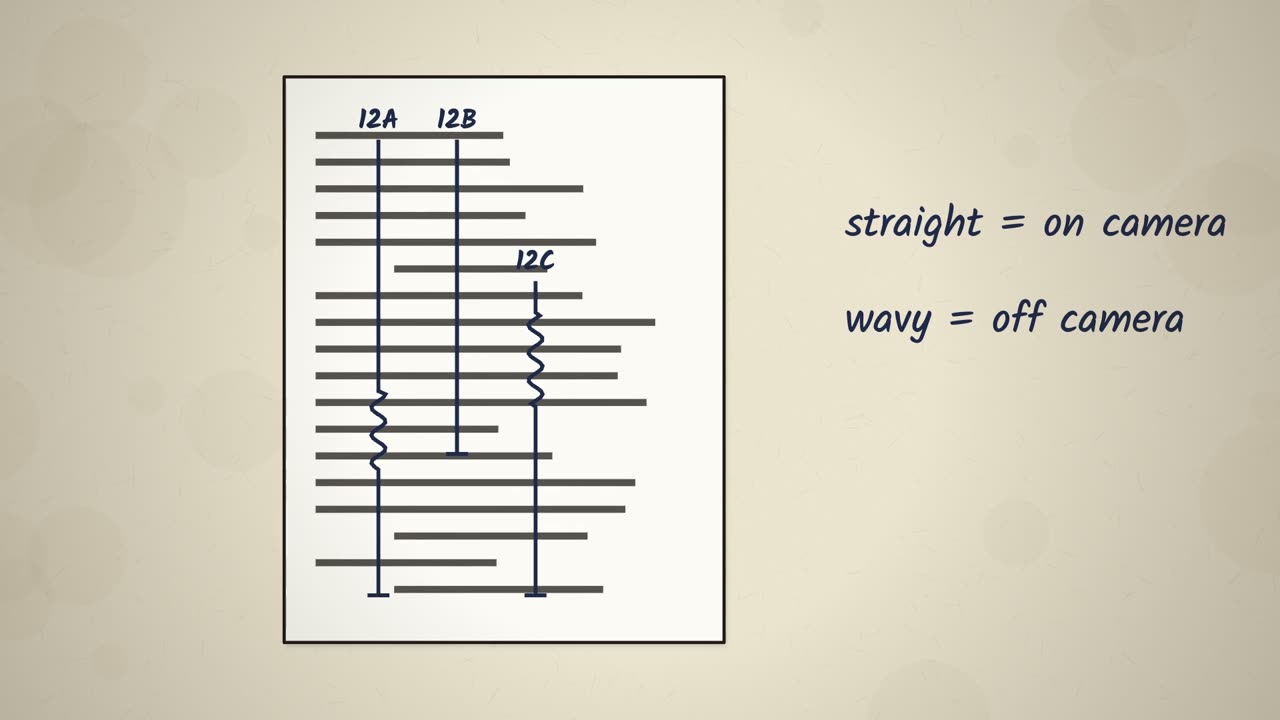
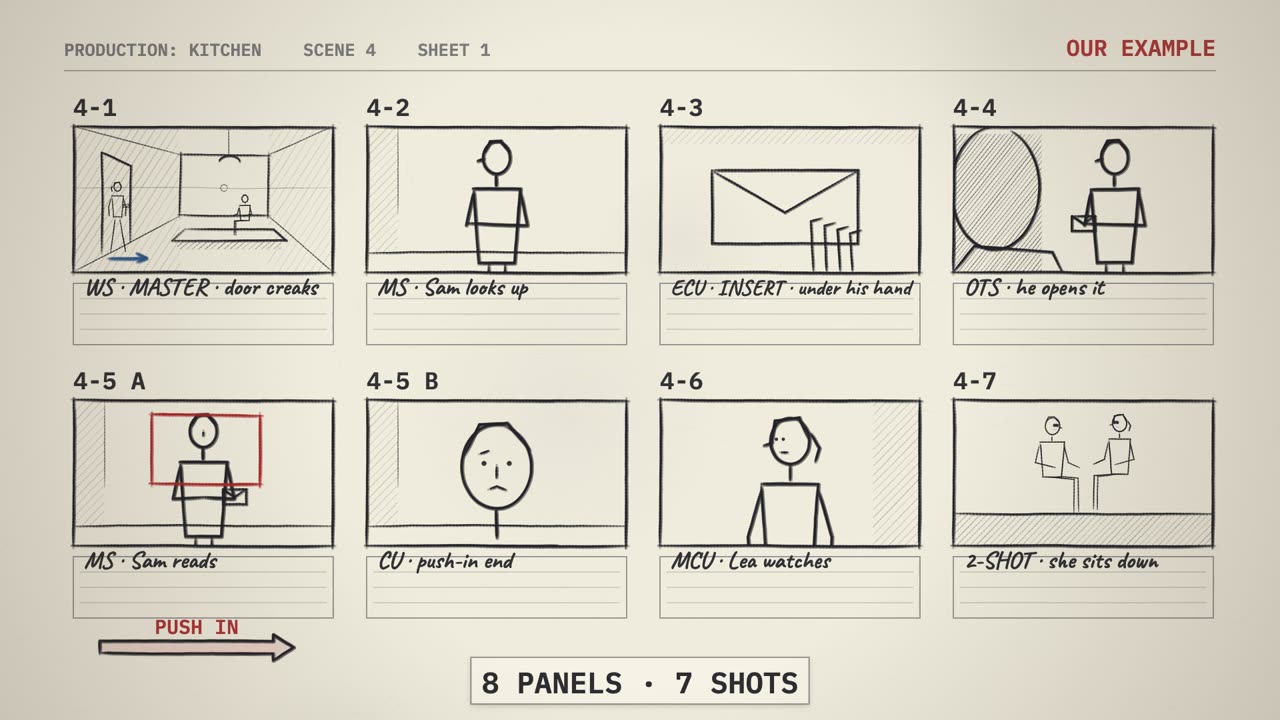
Rehearse in daylight, shoot in the window. On La La Land, the crew rehearsed a crane move for the entire day, shot five takes between 7 and 7:45 p.m., and came back the next day at the same time to shoot again [21]. It's the same method Days of Heaven used in 1976 [1]. With a window that short, it pays to have every shot decided before the light arrives; here is how to make a storyboard for it. And takes shot on different evenings still have to cut together, which is where the script supervisor's notes come in.
Backlight, then shape the face. Many cinematographers put the low sun behind the actors, so it rims their hair [20]. That leaves the face in shadow, so the crew bounces light back in with a white board or reflector [20], or takes light away on one side with a black flag or solid. That's negative fill. John Toll, on The Thin Red Line: "We used some white fill and black negative to give the characters some shape and contrast" [22]. [29]
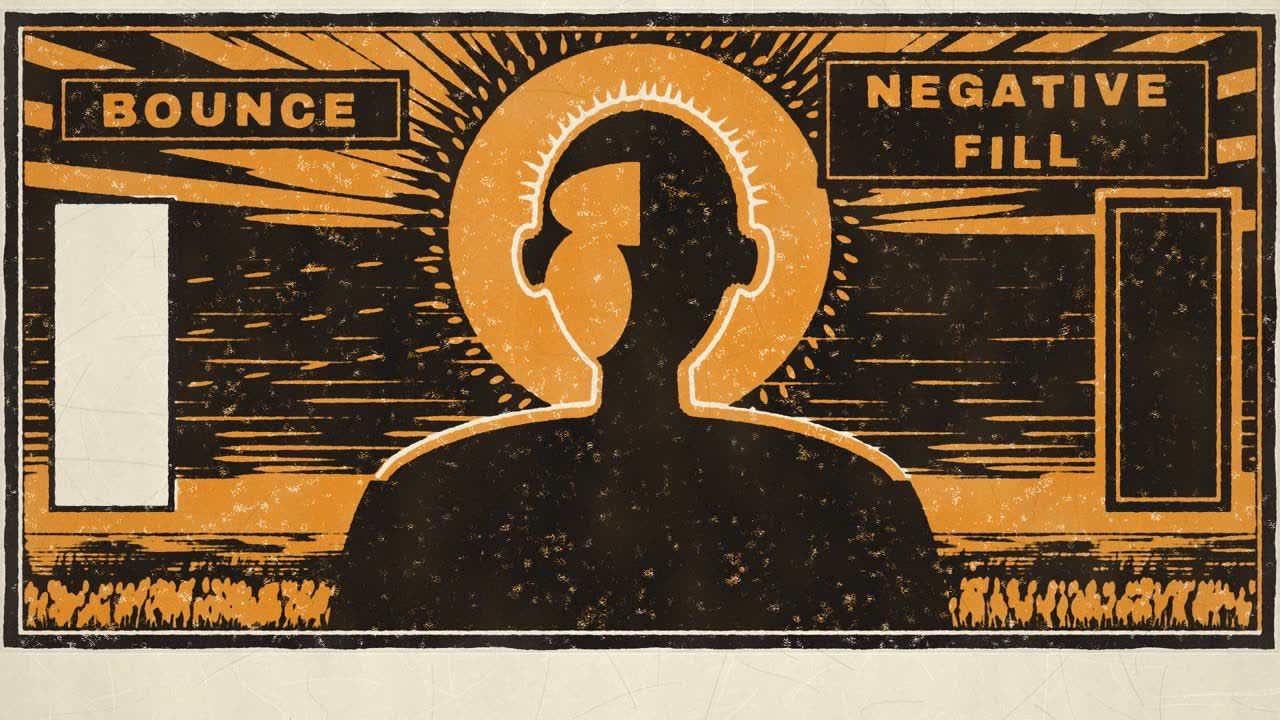
Or fake it. When the sun won't play along, crews build it: big lamps with orange gel, low and raking, or warmth added later in the grade. On A Quiet Place, the crew used two 18K lamps with half CTO gel on condors [23]. A full CTO gel turns 5,500 K daylight into about 2,900 K [23]. On The Mandalorian's LED stage, a sunset could even be held, with "two minutes to sunset frozen in time for an entire 10-hour day" [24]. Is that cheating? A little. This site is called Cheat the Shot, so we won't judge. [29]
Was Days of Heaven shot entirely at magic hour?
No. That's the legend. Almendros wrote that Malick wanted "a major portion of the film" shot in that light [1]; elsewhere he said "some scenes" and "certain parts" [2][4]. Much of the film is something else: day exteriors in full sun, window-lit interiors, and nights lit by fire. The burning wheat fields were lit mostly by the flames themselves, from propane burners, over about two weeks of night work [1][2].
Even the day scenes were bare. Out in the daytime fields, Almendros used no lights. He exposed for the shadows and let the sky burn out and lose its blue [1][3].
Chasing the last light
When the magic-hour light started dying, Almendros went after it, step by step [1][2][3]:
- Every magic-hour scene was pushed one stop in the lab.
- He opened his fastest lens, a 55 mm, all the way, to T1.1.
- He pulled the orange 85 filter off the camera.
- As a last resort, he slowed the camera to 12, then 8 frames a second, and told the actors to move very slowly.
Every take came out a slightly different colour, because the light was changing under them. The lab at MGM took those "unmatched variations" and timed them "into a smooth, consistent flow" [1]. Scenes that ran out of light were finished the next evening, waiting again for the magic hour [1][2]. Malick wanted to keep shooting after the light had gone; Almendros told him he was like Joshua in the Bible, trying to stop the sun [3][4].
Why did Néstor Almendros leave Days of Heaven?
Search for the film and the internet finishes the sentence for you: was he going blind? Here's what the record shows.
- The legend: that he left because his eyes were failing. "Slowly going blind" first appears in Peter Biskind's Easy Riders, Raging Bulls (1998), without a source there. He was very nearsighted, and later accounts say his sight was failing [5][27]. But that is not why he left.
- The record: he had promised to shoot François Truffaut's The Man Who Loved Women, and it started on time. He said so in 1978, in 1979, in his memoir and in his Oscar speech [1][3][4][26].
Haskell Wexler took over and overlapped with him for a week. By Almendros's count, Almendros shot 53 days and Wexler 19 [1][4]. Wexler's credit reads "Additional photography". He once timed the film with a stopwatch and wrote to Roger Ebert that more than half of the footage was his [25]. In 2013 he said the credit was right, because "Nestor set the style, he and Terry set everything" [25]. The share itself is still disputed: in 2015 Wexler put it at about forty-five minutes, in a film that runs about 94 [28].
On 9 April 1979, the Oscar for cinematography went to Almendros. From the stage he thanked Wexler, "who came at the end of the movie when I had to leave on a previous commitment", and said of Malick: "These images belong entirely to him" [26]. So both men, in the end, pointed at somebody else.
Nobody stops the sun
Nobody stops the sun. A crew can only know where it will be, when it comes, and how fast it's leaving. So when a film goes gold on you, there's often a crew behind it that waited all day for twenty minutes. Magic hour, they called it. Almendros called that optimistic.
Plan your own golden hour
Planning the window is the part you can do from your pocket. Our app, DOPro, is made by EgeTech, the studio behind this site and the channel. It's a director's viewfinder for iPhone and iPad, and one of its on-set tools is a sun tracker, for checking where the sun will be on your shoot day. You don't need it for anything on this page: a compass, a sun-path app and your outstretched hand will do.
Sources
- Néstor Almendros, "Photographing Days of Heaven", American Cinematographer, June 1979; ASC republication. https://theasc.com/articles/photographing-days-of-heaven
- "Nestor Almendros: Days of Heaven", American Cinematographer, May 1979, pp. 463 to 466 and 516 (archive.org).
- Brooks Riley, "Interview: Néstor Almendros", Film Comment, Sept–Oct 1978. https://www.filmcomment.com/article/interview-nestor-almendros/
- Néstor Almendros, A Man with a Camera (Farrar, Straus and Giroux, 1984), Days of Heaven chapter (read through archive.org full-text search).
- John Bailey, "Memories of Almendros", American Cinematographer, August 1999, p. 120.
- AFI Catalog, Days of Heaven (1978). https://catalog.afi.com/Catalog/moviedetails/56267
- Whyte Museum of the Canadian Rockies, Bruno Engler fonds, "Movie: Days of Heaven", 1976. https://archives.whyte.org/en/permalink/descriptions57207
- US Naval Observatory, "Rise, Set, and Twilight Definitions". https://aa.usno.navy.mil/faq/RST_defs
- timeanddate.com, "Golden Hour" and "Blue Hour".
- The Photographer's Ephemeris, "Magical Gold and Blue".
- Oxford English Dictionary, "magic hour, n." (2020). https://www.oed.com/dictionary/magic-hour_n
- "The Deer Hunter" (Vilmos Zsigmond), American Cinematographer. https://theasc.com/articles/the-deer-hunter-cinematography-zsigmond; and its article on The Professionals
- American Meteorological Society, Glossary of Meteorology, "Rayleigh scattering" and "diffuse sky radiation".
- NASA Space Place, "Why Is the Sky Blue?"
- F. Kasten and A. T. Young, air-mass formula, Applied Optics 28(22), 1989; Andrew T. Young, San Diego State University, "Air mass and refraction".
- ETC, on the colour temperature of daylight; Konica Minolta Sensing.
- A. Lange, V. Rozanov and C. von Savigny, "Revisiting the question 'Why is the sky blue?'", Atmospheric Chemistry and Physics 23 (2023).
- Sky & Telescope, "Tiptoe Into the Twilight Zone" (2015).
- Our own sun calculation with the NOAA solar algorithm for Lethbridge, Alberta (49.69 N) and the equator, checked against timeanddate.com sunset and twilight times.
- Jay Holben, "Shot Craft: Follow the Sun", theasc.com, 26 July 2021; American Cinematographer on Gladiator and on Dune: Part Two.
- "La La Land: City of Stars", American Cinematographer.
- John Toll on The Thin Red Line, American Cinematographer.
- American Cinematographer on A Quiet Place (gaffer Bill Almeida); Rosco #3407 RoscoSun CTO specification.
- American Cinematographer, "The Mandalorian" (Baz Idoine).
- Roger Ebert, "Great Movie: Days of Heaven", 7 December 1997; Matt Zoller Seitz, "It's Real: A Few Words with Haskell Wexler", RogerEbert.com (Ebertfest 2013).
- Academy Awards Acceptance Speech Database, 51st Academy Awards, Cinematography (1979). https://aaspeechesdb.oscars.org/link/051-6/
- Peter Biskind, Easy Riders, Raging Bulls (1998), p. 297.
- Haskell Wexler in Terrence Malick: Rehearsing the Unexpected (2015).
- Professional review of the craft points (magic hour usage, the compass and the finger rule, rehearsal, backlight, bounce and negative fill, faking it with lamps and gel): Onur Thornfield, cinematographer, November 2026.